Introduction of the Renewal via the app (iOS & Android).
Increased conversion from 4.000 to 40.000 renewals per year
Problem
Members had no way to renew their membership without visiting the club.
When a membership was about to expire, members had to go to the front desk during opening hours and fill in a paper form. Staff scanned it and sent it to HQ, where it was manually re-entered into the system; slow and error-prone. Whenever pricing changed, new forms had to be designed, printed, and distributed to every club. The process was costly for the organisation and inconvenient for members.
Solutions
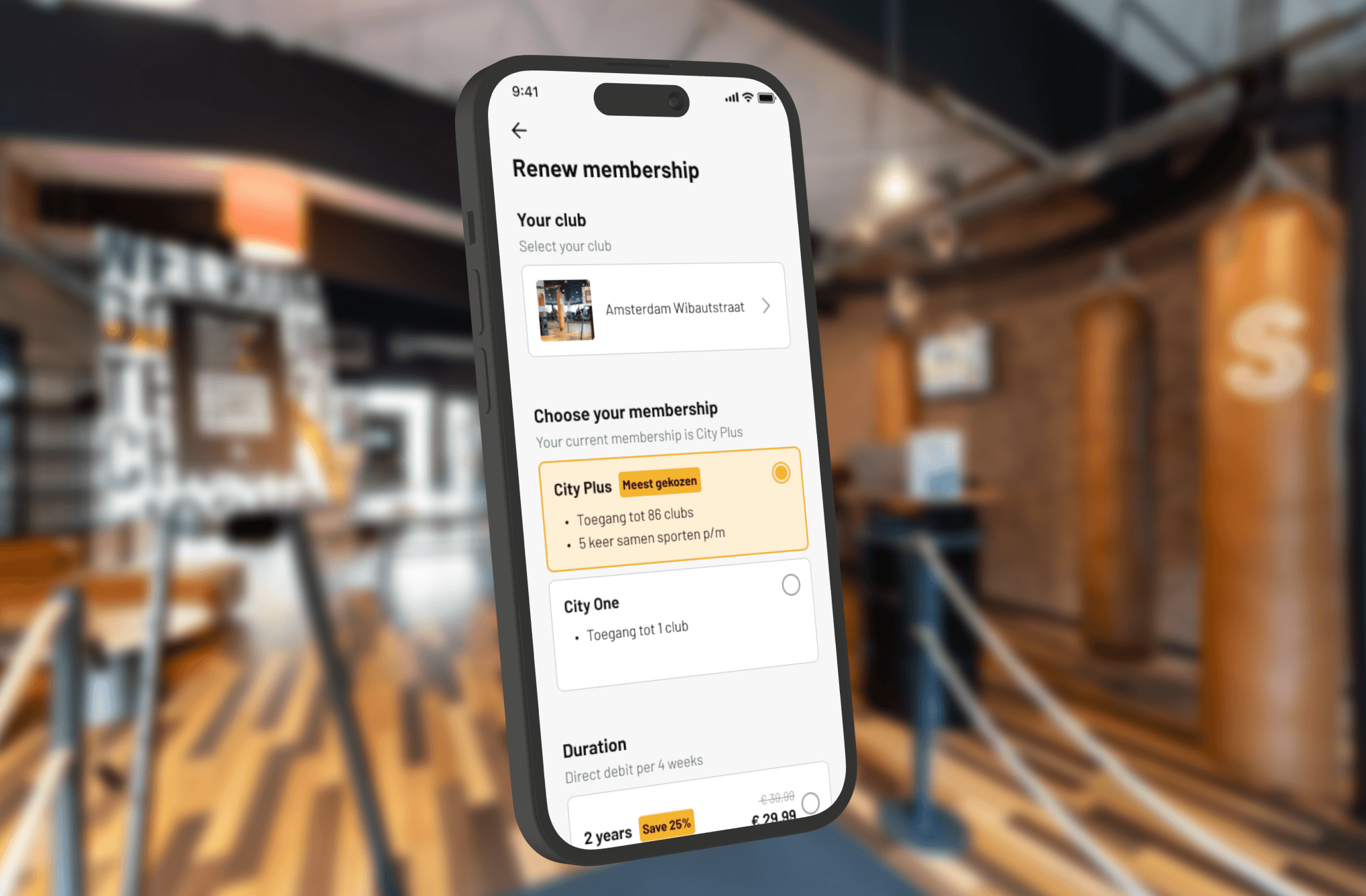
A self-service membership renewal flow, built directly into the SportCity app.
Members can now renew from their phone, at any time. The flow reuses existing account data — current club, membership type, and payment details — so there's minimal input required. Members choose a duration, see the price clearly (including a discount for committing to a longer term), and confirm in a few taps. The paper form is gone, and so is the manual processing at HQ.
Process:
1. Wireframe
2. UI design
3. Prototype
4. Usability test in club
Role:
UX design
UI design
Prototyping
Research
Tools:
Figma
FigJam
Year:
2025
Personal stuff I learned
Usability test
To validate the design before development, I built a prototype and conducted usability tests with 4 SportCity members at the club.
"It's similar to renewing an energy contract, not difficult."
Key findings across all sessions:
Findability needs work Multiple users didn't expect to find the renewal option under "Membership." Two user looked under "My Club" first, which felt more intuitive to them.
Confirmation is everything All 4 users missed a clear success state after completing the renewal. They were left uncertain whether anything had actually happened.
Changing bank details caused confusion The €0.01 verification payment wasn't explained well enough. Users were surprised by an unexpected payment request and didn't understand why it was needed.
Price transparency matters Users wanted to understand what they'd pay after the contract period ends, not just during it. One user also felt the yellow highlight and "most chosen" label pushed them too hard towards City Plus.
Overall the flow tested well Scores ranged from 7 to 8 out of 10. Users found the duration options and price overview clear.
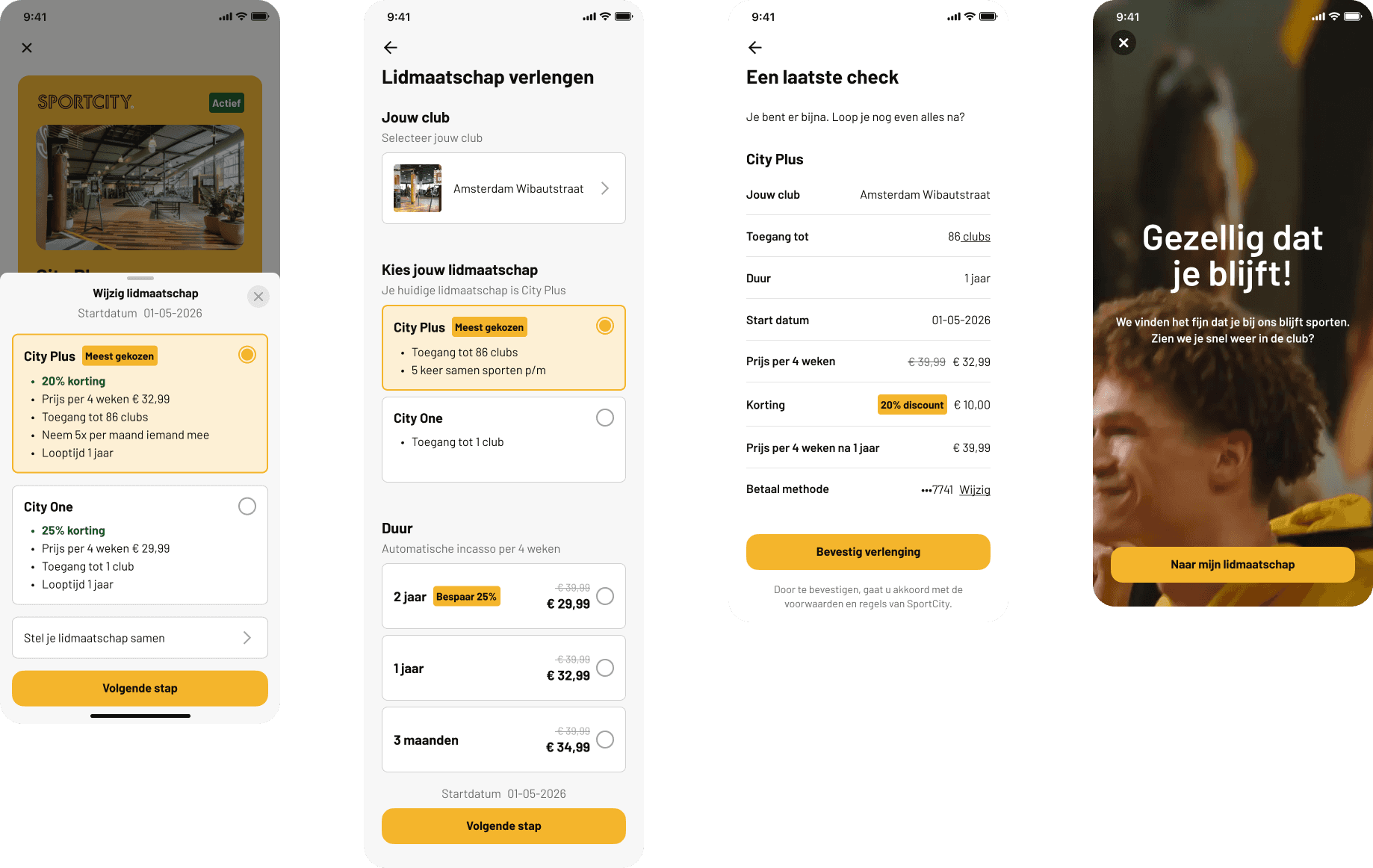
Renewal UI flow
From plan selection to confirmation, the full renewal flow in 4 steps.
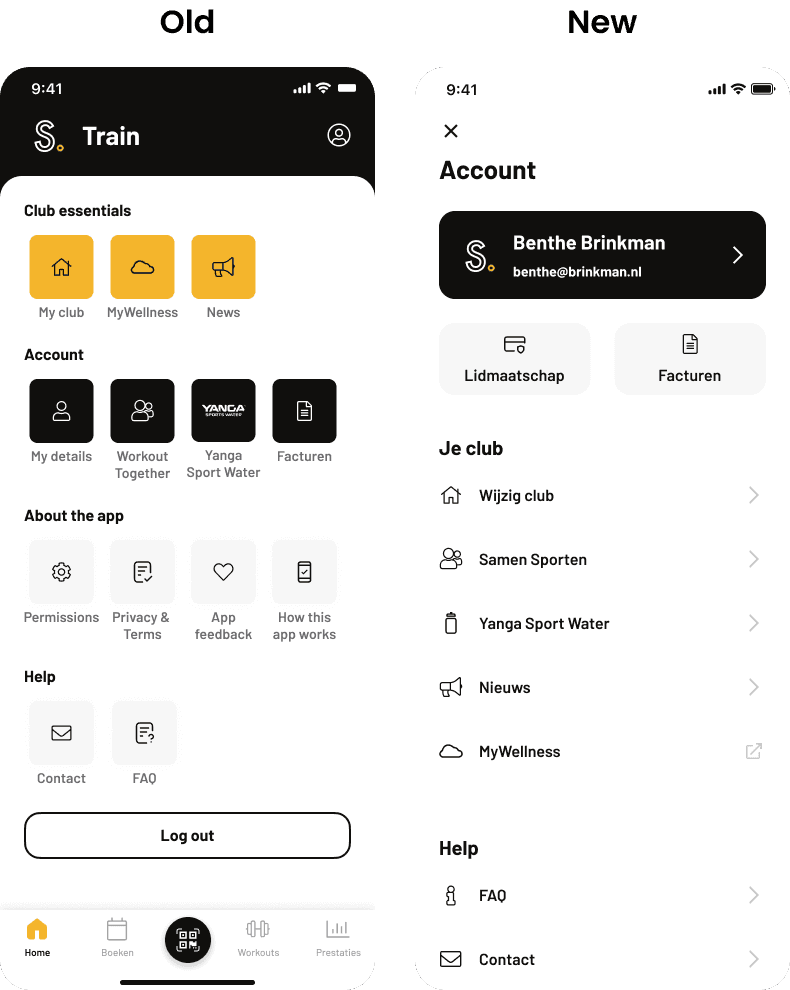
Account overview redesign
The account screen had grown organically over time, resulting in a grid of tiles that mixed unrelated features under loosely defined categories.
Introduction of Invoices
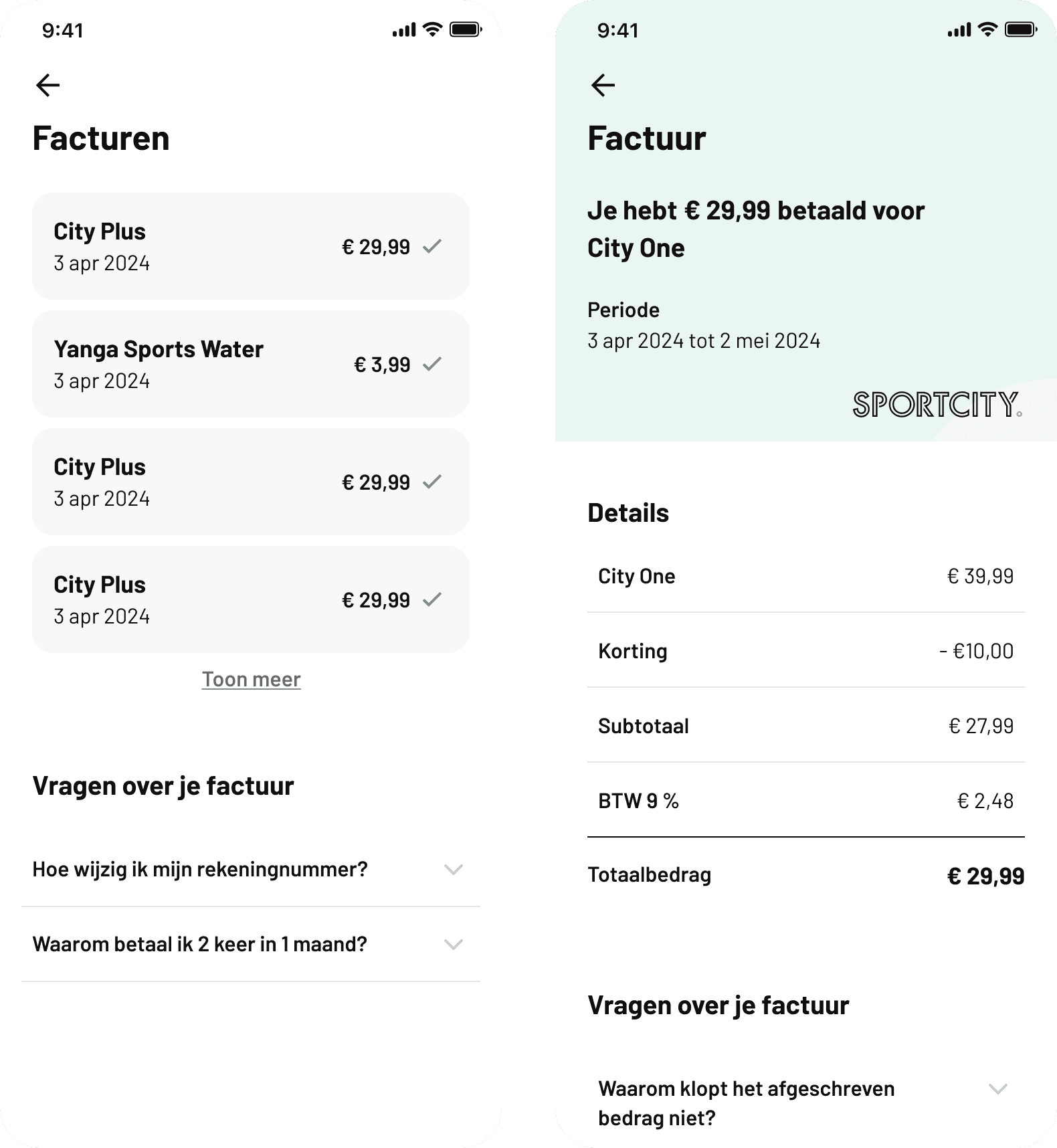
Members had no way to view their payment history inside the app.
I designed an invoices screen that handles four states — paid, unpaid, upcoming, and open — and links through to a detailed invoice view.
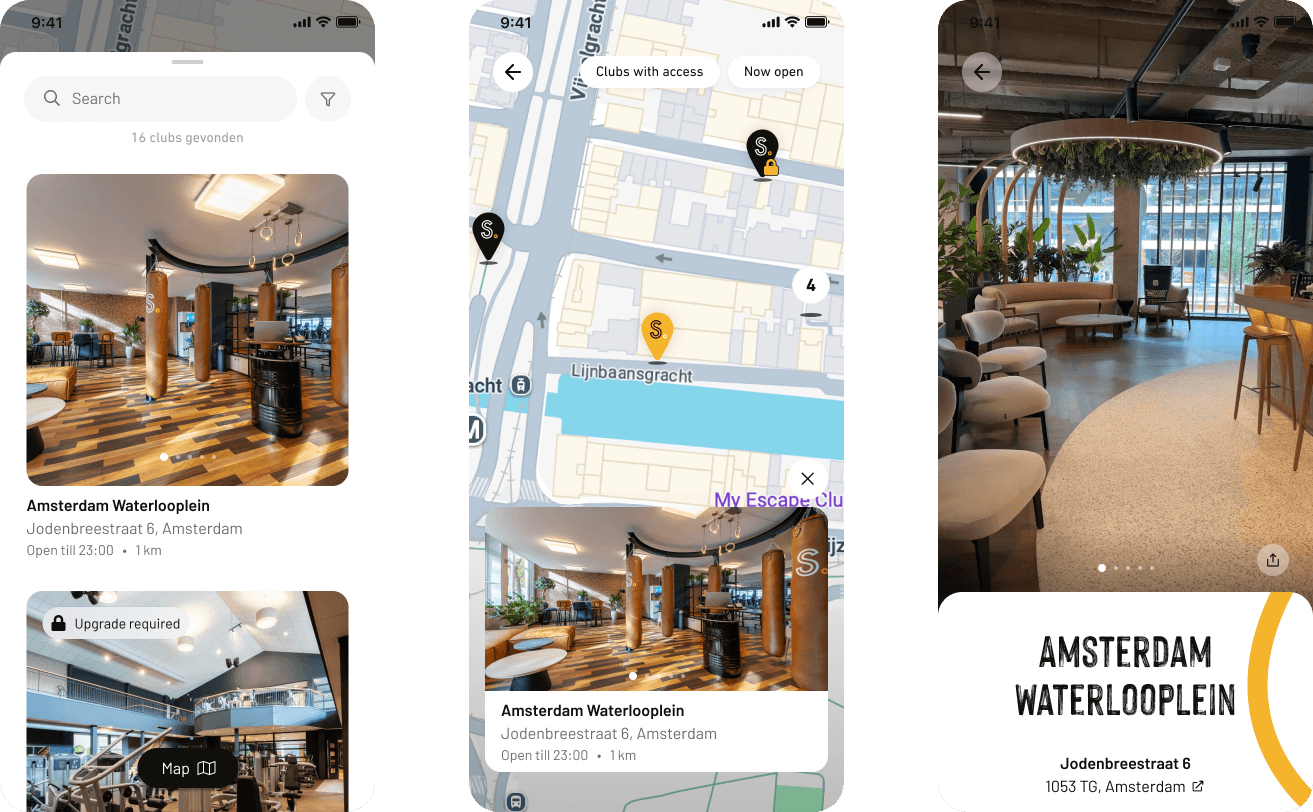
Club finder
Members had no way to know which clubs they could access with their membership.
SportCity has a tiered model. Members can visit clubs in their own price range or lower, but not higher. I designed a club list and map view that makes access immediately visible.
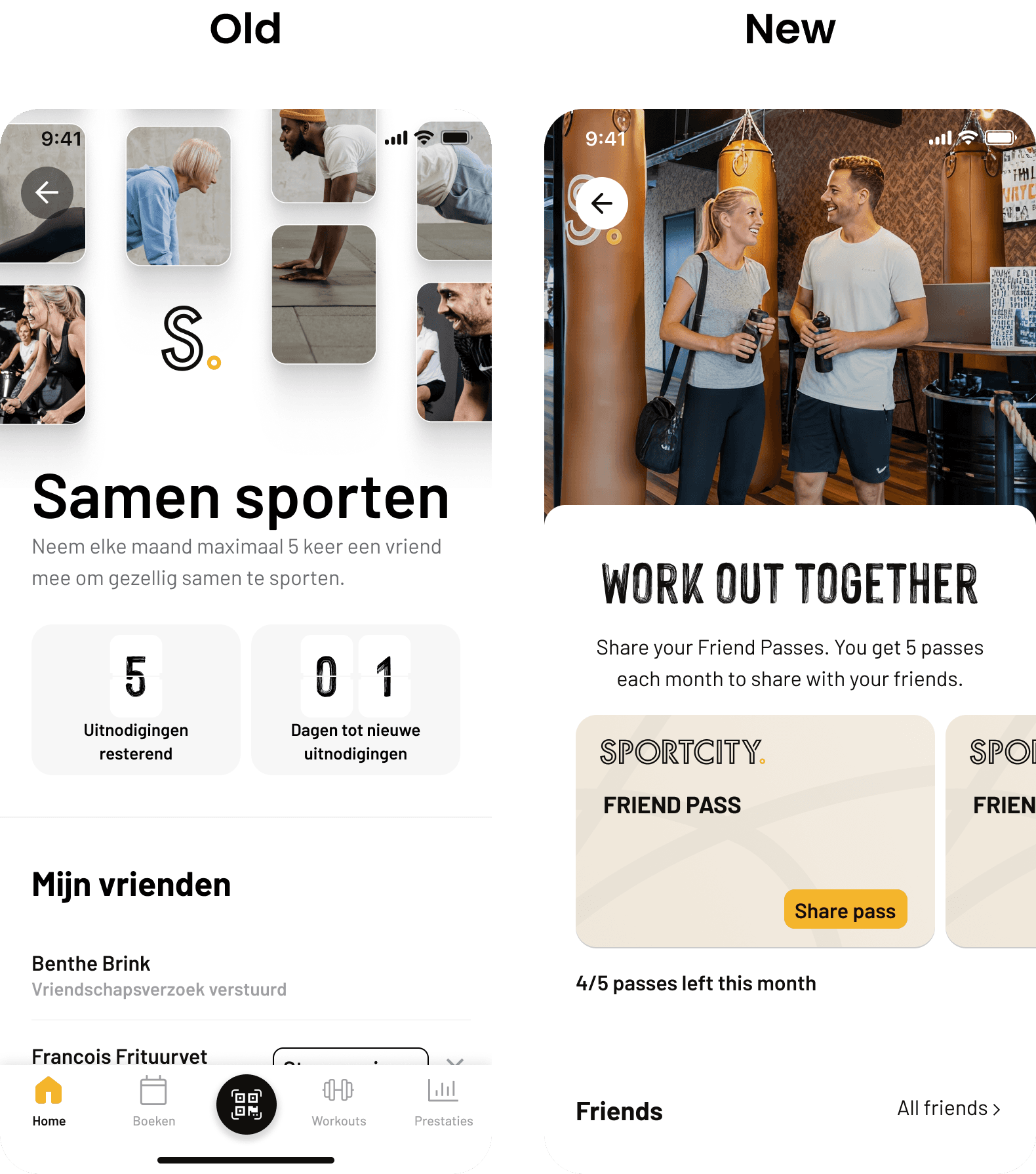
Work Out Together
Every time a member wanted to bring a friend, that friend had to register again on the website.
I redesigned the flow so friends register once and are then permanently connected in the app. Members can send Friend Passes directly to their saved friends.
More work